Written by Paul J Bucknell on April, 15, 2026
Genesis 1:1-2:3 Creation and the Worship of God , a Handout
A) Introduction to Genesis 1:1-2:3
- Is all of mankind obligated to worship God?
Why or why not? - Is the non-Christian who never heard of God liable for his knowledge of God? Explain.
Objectives:
1) Understand what the scriptures say about the creation of the world.
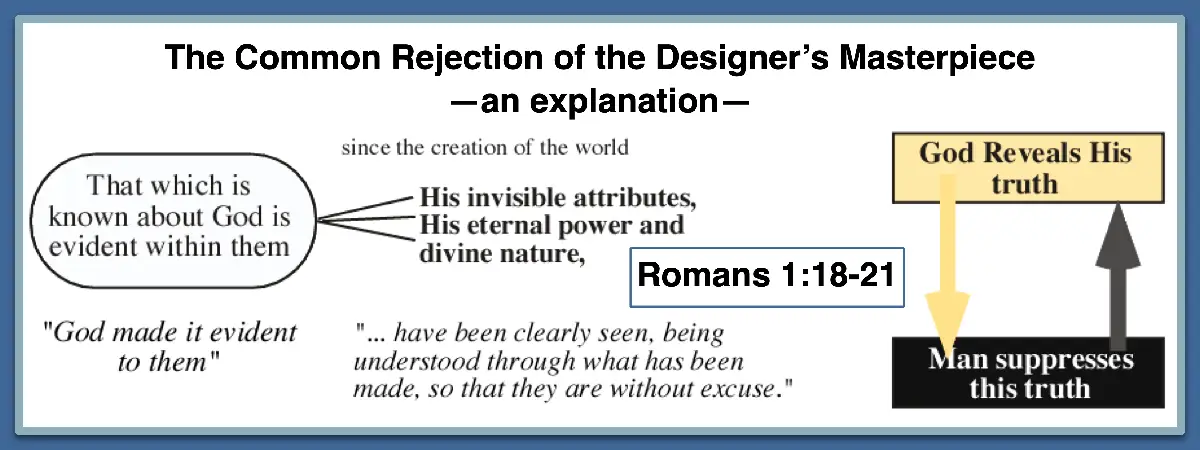
2) Show why every person is responsible for worshiping God with their whole heart.
3) Give evidence that a healthy Christian is consciously leaning upon God
4) Recognize that God is free to use creation to serve His own purposes.
In the beginning God created the heavens and the earth. 2 And the earth was formless and void, and darkness was over the surface of the deep; and the Spirit of God was moving over the surface of the waters. 3 Then God said, “Let there be light”; and there was light. 4 And God saw that the light was good; and God separated the light from the darkness. 5 And God called the light day, and the darkness He called night. And there was evening and there was morning, one day.
- Our understanding of God, the world and man largely comes through the Genesis creation account.
B) Characteristics of God
- The glorious attributes of God are clearly projected
- God’s power and eternal nature, His love, beauty, and goodness,
- His order and purposes.
- No doctrinal statement is as powerful as the record of God's mighty works in Genesis 1.
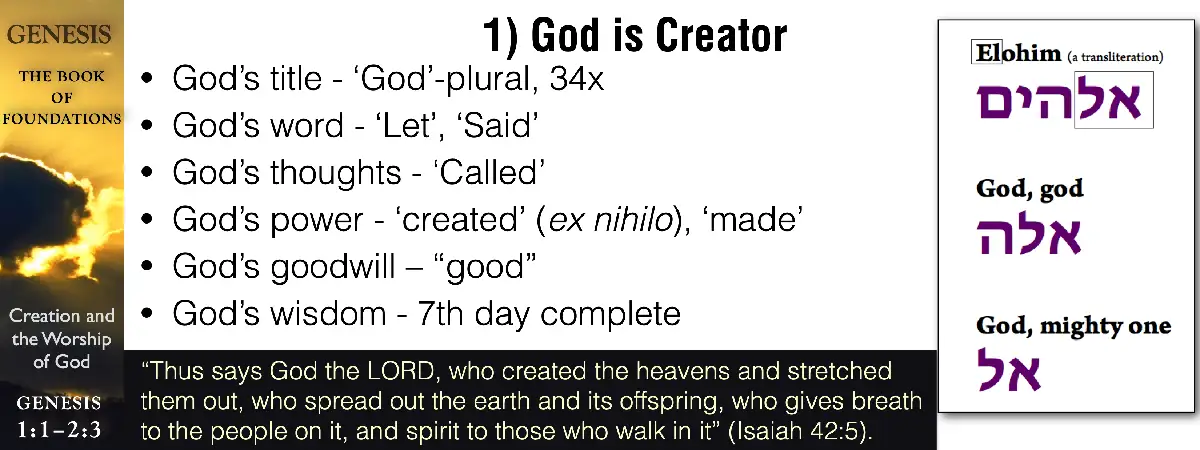
God's Title
- •God’s title - ‘God’ 34x
- •God’s word - ‘Let’, ‘Said’
- •God’s thoughts - ‘Called’
- •God’s power - ‘created’, ‘made’
- •God’s goodness - ‘was good’ 7x
- •God’s wisdom - 7th day complete
The True God versus false gods
- 1) Personal God
(a) Monotheism: God is above the world as Creator.
(b) Polytheism: Many gods live around the world (idols, animistic). - 2) Impersonal god
(a) Pantheism: god is the world
(b) The Force: god is spirit force in the world
(c) World Soul: god is spirit force - no real world - 3) No God (atheists, secularist, certain religious philosophers)
Characteristics of the World
- God is interested in our lives. He desires the increase of blessing in our lives and has created a world to provide fulfill that goal (God does have other goals as well).
- As our Maker, God brought us into existence.
- As our Designer, He has seen through all the details of our lives.
- As our Provider, He adequately provides for all our genuine needs. (e.g. symbiotic)
C) Relationship Between God and the World
- Order of creation
- 7 Days
- Truth: Sequence and purpose verses False: Chance and meaningless
- Creation - made - servant
- Mark 10:6, “But from the beginning of creation, God made them male and female.”
- “Thus says God the LORD, Who created the heavens and stretched them out, Who spread out the earth and its offspring, Who gives breath to the people on it, And spirit to those who walk in it” (Isaiah 42:5).
- If we deny the Genesis account, it seems like we not only have to deny Jesus’ words but also the words of other prophets like Isaiah.
- Creation’s purpose
- Man is expected like the rest of creation to completely follow along with God’s plan. Genesis 1 breaks through the many barriers man has put up excusing his obedience by presenting how intimately He is involved in our lives.
- Man’s greatest knowledge will come from understanding his life in relationship with God’s purpose for him.
- Man’s greatest peace will come from living in harmony with God’s purpose for his life.
- Other topics
- Creation versus evolution: Life is a miracle
“It is the most improbable event in the universe”, says British biochemist (M. Dixon). - Gap theory (1:1 > gap 1:2)
- Framework Hypothesis
- Documentary hypothesis (JEDP) -Jahweh (Gen 2:4)
- Science and Religion
- 1) The world is real and the human mind is capable of knowing real nature.
- 2) The structure of science is based upon cause and effect.
- 3) Nature is unified.