Written by Paul J Bucknell on February, 18, 2026
2 Corinthians 9:8 Our Weaknesses Matter: Identifying Life’s Unique Calling by Embracing Your Weaknesses
Many people dislike aspects of their lives, yet it is through these struggles that God demonstrates His grace most strongly. Personal reflection and biblical examples (Jacob, David, and the author’s own life story) show how God uses brokenness to cultivate dependence, humility, and usefulness for ministry. Weakness becomes the platform for God’s strength.
Our Key Verse (2 Corinthians 9:8)
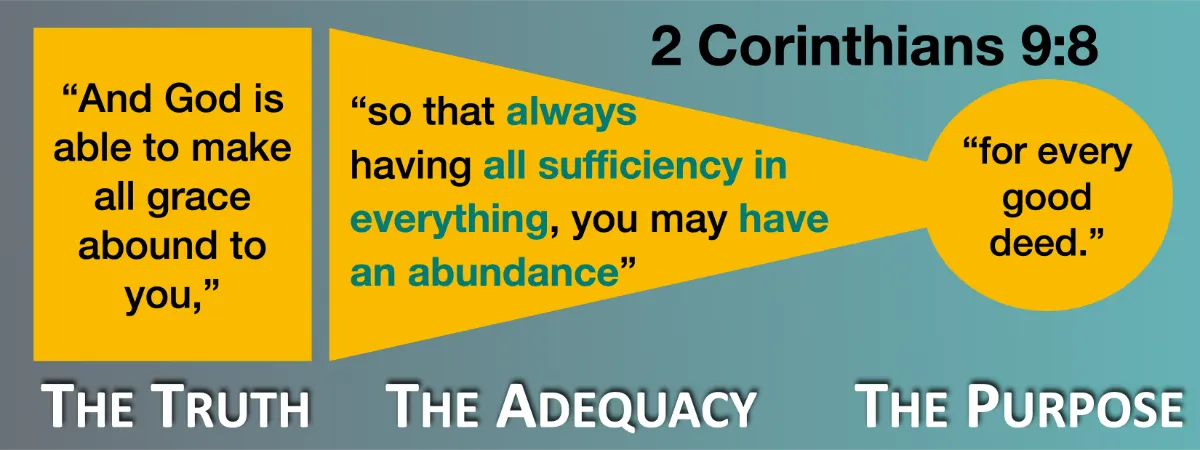
“And God is able to make all grace abound to you, so that always having all sufficiency in everything, you may have an abundance for every good deed” (2 Cor 9:8 NASB)
The three parts of 2 Corinthians 9:8 each support a different foundational truth in this article.
- God is deeply involved in our lives, especially in the areas of our weaknesses that need His grace. This is where many believe God has forgotten them!
- God’s grace is always adequate. The “always having,” “all sufficiency,” “in everything,” and “have an abundance” all point to this adequacy.
- God’s purpose goes beyond healing, but fully restores us for full functioning, so that we will do those things God has designed for us—“for every good deed.”
God’s Careful Placement
God has carefully placed every person within His sovereign plan. Most of us are so busy with our present life challenges that we never find time to better understand our significant beginnings, yet we are greatly affected by them. God oversees our lives, including our physical and social placement. This is exactly where it gets difficult for people to grasp! Though I emphasize our start in life in this article, some find that their greatest challenges come later. However, we can’t effectively address these later difficulties unless we first address those embedded early in life. The problems build on one another.
People are often upset about something from their early life—their birthplace, parents, poor health, or other circumstances. Who would choose our situation or life? Many conclude God’s treatment of us is categorically unfair. Even now, the suicide rate has skyrocketed.
Stating that God had a say in our beginnings forces them to reconsider God’s stated goodness. If they don’t like the choices made for them, the particular aspects of God’s life arrangement for their lives, they end up complaining directly to God. Most people, however, suppress those thoughts and feelings, trying to ignore them. After all, it’s not our choice; God chose them for us. We can’t do anything about them. The Psalmist wrote about our early beginnings from another perspective.
13 For You formed my inward parts; You wove me in my mother’s womb. 14 I will give thanks to You, for I am fearfully and wonderfully made; Wonderful are Your works, And my soul knows it very well. 15 My frame was not hidden from You, When I was made in secret, And skillfully wrought in the depths of the earth. (Psa 139:13-15)
God designed our bodies, as well as our parents and life circumstances. God made you and me.
A Neglected Topic
Our early-life difficulties are seldom recognized or discussed. Many Christians don’t consider them carefully, which can lead to ongoing problems. Jacob, the younger twin, faced this issue. His father, Isaac, exacerbated it by favoring Esau. Jacob became painfully aware of this preferential treatment, even though it was culturally expected. Their roles were foretold. We could explore further, noting the pointed verse, “Jacob I loved; Esau I hated,” but that would take us away from our focus. Nonetheless, like Jacob or Esau, we all have a calling in our lives, not easily discernible in our early years.
“12 it was said to her, “The older will serve the younger.” 13 Just as it is written, “Jacob I loved, but Esau I hated.” 14 What shall we say then? There is no injustice with God, is there? May it never be!” (Rom 9:12-14).
We might struggle in our early years because of our circumstances, but God never asked us about our preferred place, timing, or circumstances of our birth! They happen to us; our preferences are bypassed. This leads us to a more serious issue about how we view and handle our weaknesses.
Our Weak Spots and God’s Design
It’s not just that we would choose a different beginning for our lives, but that many of us come to detest our early experiences. So why does God accept or choose them? Let me further shake up our initial conclusions by suggesting that God specifically crafted these hardships, including birth order, personality traits, quirks, and disadvantages, so that He could carve out a unique way to speak to us. God made us to be in fellowship with Him and to uniquely make His magnanimous grace evident in our lives. He uses a multitude of ways to draw us to Himself. This is why He sent His Son, Jesus Christ, to die for us. This was the huge welcome sign showing that we could trust Him. If He would give us His Son, then He will give us all things.
“He who did not spare His own Son, but delivered Him over for us all, how will He not also with Him freely give us all things?” (Rom 8:32)
One might resist this proposal by arguing that it is through conveniences, benefits, and other life advantages that we can better know God’s love. But this argument is not so straightforward; we live in a sin-cursed world. Our parents and family are negatively affected. God also knows that we would more likely seek His help when we face life’s hardships.
As sinful people, we don’t naturally follow God. The easier life is, the more we tend to stray from the Giver of life, perhaps because we suppose we can live comfortably without His company and help. The Spirit of God uses our dire circumstances to draw us to seek Him. The scriptures teach that no one seeks Him (Rom 3:11). Only the Spirit of life, actively working in our lives, can melt away our stony hearts even in life’s most strenuous moments.
As an example, an early premie in our church had significant heart issues and had just undergone major procedures to preserve his health. The parents and baby never chose this for their newborn! But I can assure you that no other baby was prayed over and loved as much as he was because of his needs. He was loved even more because of his physical frailties, and here we see God’s love magnified by the evident surge of love from the congregation.
Personal Reflections on Our Weaknesses
God has special truths to reveal to us, and he does so through our pronounced weaknesses, including where we were born, how we were born, and how we were raised. Sometimes it’s physical problems or an ugly feature. I personally am an ordinary person from a poor, broken family. For a long time, I’ve reflected on my weaknesses. My home was deeply fragmented by numerous divorces and serious problems.
My greatest problem was growing up without my father. My parents divorced early on. Because he lived far away, I only saw him occasionally. He did his best, but the situation created a special need for a father figure, someone who cared for and loved me. My weaknesses and lack of confidence in school probably stemmed from this. I avoided public speaking because I stumbled over my words, and my English was poor. It still is. But that’s my whole point. Here are three pronounced weaknesses that you could say God arranged for me in order to magnify His grace in me.
(1) As a close Father, God became very personal and close to me. I treasured His presence and help. He was my Father in a special way.
(2) God wanted me to learn public speaking. Even in my first year of college, when He called me to ministry, I knew how poor my speech was, stuttering every couple of words, especially in public. My deep-down insecurities have made it difficult for me to express myself, and still do. That’s why I say God called me into ministry, where I would have to speak by His grace. I’m simply obedient. (I originally chose the path of engineering.)
(3) I couldn’t put words and thoughts to paper, but He called me to a writing ministry. It’s amazing how He began to work in my mind to convey many scriptural discoveries. I didn’t start BFF; God did. I had no confidence in ministry until He led me. I had to trust Him to use me.
God used my weaknesses to carve out a path for my life that magnifies His grace. Recently, I’ve been reflecting on how, now that I’m 70, God has used His great grace, along with my small efforts, to accomplish significant work for His glory, benefiting His people around the world. It’s amazing how He has done this.
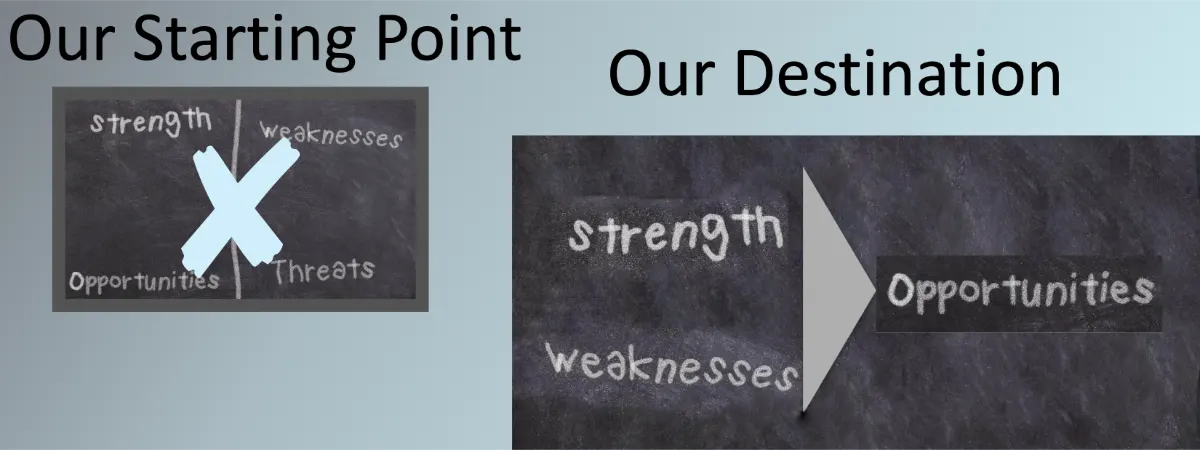
Moses wasn’t a great orator: “for I am slow of speech and slow of tongue” (Ex 4:10). David was looked down on; all his brothers were called to be blessed and eat with Samuel the Prophet: “He also consecrated Jesse and his sons and invited them to the sacrifice” (1 Sam 16:5). But not David; he was left alone to care for the flock. David’s father had seven sons and ignored the youngest, David. God had to give Samuel specific directions to his father to call him. This special situation created a unique way to reach David’s heart, leading him to seek and enjoy God’s presence, as seen in the Psalms. His weakness became an opportunity for strength.
The more we recognize our dependence on the Lord, the more we lean on Him and seek conformity to His grand purposes. We can do nothing on our own, but the Lord seeks opportunities to work through us to carry out His work. Our testimony is not about us but about our inability. That’s where God meets us in the most amazing ways. This is true regarding our sins and in all aspects of our lives.
Correctly Understanding Your Life
So think about your own life for a minute and possible handicaps, whether it’s physical, spiritual, emotional, or family-related. You might resent your poverty and inner struggles, thinking they kept you back. Focus on the most pronounced ones you have had the most difficulty handling. Even now, they can still be your biggest stumbling block, but begin to think about how God created a unique need so you could trust God and see Him work in you. Instead of resisting Him on this point, welcome Him to enter that closed door of your life and miraculously heal and use you.
A Wonderful Testimony
Let me share a story about a coworker in God’s kingdom in India. There are many other testimonies from millions of people around the world who are experiencing God’s work, but one example is enough. I spent much time with Jagannath. Although he was born into the highest Hindu caste, his family was driven from their land and wealth. To make matters worse, his father became blind while working in a chemical factory. His son, Jagannath, spent many years accompanying his blind father on trains as a boy, begging. Since coming to know the Lord and starting an outreach to the Bengali people, he has greatly valued people from all castes, including children, many of whom were rejected by their parents or were hooked on drugs, as well as the blind. I was recently astonished by the size of the building he was constructing to aid the blind. He didn’t have the money, but he saw their need. Who shares this burden that God has for the blind? He raised up this brother in his dire circumstances for this work. God works with him, providing for it.
Building Your Story
Step back and consider your weaknesses as opportunities for God to reveal His glory. I should say these are the first places where God wants to reveal His greater glory because it’s easier to see. We start with nothing but need; we have no solutions except the Giver of Life. We crave something to fill that gap in our lives. Don’t blame anyone for these weaker areas, not even God. Instead, see them as special means God created to reach deeper into your inner life. While gifts, including spiritual gifts, are pronounced assets, look to and treasure your weaknesses. Forgive others as He instructs you.
These are the very places where God seeks to reveal His glory. God did the same through Jesus on the cross; He will also do it through us. Consider those in the New Testament who most appreciated Jesus. The greater the need, the deeper the appreciation for God’s almighty touch. But it never stops there. He works in us so He can reach out to others, the third part of 2 Corinthians 9:8, so that “you may have an abundance for every good deed.”
Nothing has changed in our age. People everywhere are filled with troubles. They spend all their time bemoaning their struggles, not realizing these struggles are places where Jesus can come to uniquely aid them. Don’t despise your weaknesses but treasure them as places God wants to especially meet you. (Of course, we can reprove ourselves for our own foolish decisions, but those are our own.) Our challenges will always seem impossible, but God stirs up hope that He will work in you. On that basis, open up the empty caverns of your life, and plead that He fill and use you. The Lord doesn’t just want our souls; He wants our attention and our relationship to thrive in His presence. He is a master at using our weaknesses to mark us as His beloved servants.
Spiritual Insights
- Look Beyond Circumstances: It’s difficult for people to see and believe in God’s goodness when they are raised in difficult circumstances.
- Trust the Design: God is wise enough to use our frailties in this troubled world to accomplish His grand purposes.
- Reject the Blame Game: Satan confuses us by making us blame God and others for our situations.
- Find Intimacy in Weakness: God uses our weaknesses to create a special way to commune with us and to make us sensitive to what is on His heart.
- Forgive to Heal: Forgiveness often opens the path to God’s healing stream for us and others.
- Expect Greater Restoration: The greater the struggle, the more healing we can look to the Lord for.
- Restoration Leads to Service: God’s work never ends with helping us; this is only a means to bring us to a place where He can use us to carry out His good and perfect will.
These insights are found in our verse. “…God is able to make all grace abound to you, so that… you may have an abundance for every good deed” (2 Cor 9:8). God specializes in working through our weaknesses so that His Name might be better praised, seeing how He can and is willing to personally work in and through us. The attached study questions help you to apply these lessons.
Study Questions on Our Weaknesses
- What are the three crucial parts of faith revealed in the author’s analysis of 2 Corinthians 9:8?
- What are one or two greatest struggles you had growing up?
- How did they affect you as you grew older?
- Why do people despise weaknesses?
- According to the text, why might God choose to bypass our preferences regarding the timing and place of our birth?
- What is the best way to see these struggles, mostly forming early in life?
- Why does the author suggest that ‘conveniences and benefits’ might actually make it harder to know God’s love compared to facing hardships?
- Identify one of your struggles and the healing you need. Thank Him for the struggle and welcome Him in, even if you have done so before.
- How has God broadened your life and service through these life situations? Special insight, burden, ability, opportunity, depth, etc.
Other Related Articles by Paul J. Bucknell
Genesis 25–35 – Appreciating God's Discipline: God and Man's Sin
Genesis 25–35 – God and Man’s Sin shows the way God deals with the unbeliever (Esau) and the believer (Jacob) and how He judges all sin.
Genesis 25–35 – Understanding Man's Sin Nature
Esau’s problem was rooted in his disdain for his godly inheritance and in Isaac’s refusal to do what was proper. Jacob sinned both against his father and his …
Genesis 25:1-34 – The Importance of Making Right Decisions
Esau and Jacob were both greatly blessed by God to become nations. This was foreordained. God decided on this. It was only through the prophecy that we know …
Genesis 25–35 – Understanding Jacob's Sins
Isaac tried to “trick” God by blessing Esau, his favored son, but he was himself deceived. Rebekah schemed. Jacob deliberately showed disrespect by deceiving …
Genesis 27–36 – Jacob, A Blessed Man
Jacob’s Meeting with Esau (32 and 33) … Though still a schemer, Jacob is truly humbled after working for Laban for 20 years. God had polished Jacob during this …
Genesis 25–35 – Appreciating God's Discipline: The Influence of Sin
Genesis 31 – Jacob escapes Laban; God blesses Jacob; Genesis 32 – Jacob fears Esau; humbled by God; Genesis 33 – Jacob restored to Esau at great cost; Genesis …
Two Kinds of Grace: Part of Common Grace in Grace so Glorious
The Lord Your Healer. Discover Him and Find His Healing Touch. First step of discipleship. Learn about the first steps of discipleship!
Examples of Common Grace - Biblical Foundations for Freedom
The Lord Your Healer. Discover Him and Find His Healing Touch. First step of discipleship. Learn about the first steps of discipleship!